
Chemists use a special reagent called NBS that is an important ingredient in many reactions. Let's parse NBS and learn more about how it works and why it's useful in organic chemistry.
NBS (N-bromosuccinimide) is a useful reagent in organic chemistry. It can be used to add bromine atoms to organic compounds by the bromination reaction. Suru nbs bromo is significant because the characteristics and behavior of organic molecules can be greatly influenced by bromine atoms.
NBS serves as a unique reagent in the bromination reaction. Bromination is an electrophilic addition reaction in which a bromine atom is added to another molecule. It can also lead to the creation of new materials with different properties from the initial substance. Selective brominations, where only one or a few of many possible sites of bromination are reacting with NBS, are special features of NBS being used.

Typically, NBS is used in radical reactions, where it causes the formation of a bromonium ion between two carbon atoms. In these reactions, Suru n bromosuccinimide nbs facilitates the production of bromine radicals, which can then react with other molecules to create additional products. It is important to have knowledge about the route NBS takes in the radical bromination reactions since it can help to control the direction of the reaction and to reach desired products.

A major advantage in the use of NBS in organic chemistry is its selectivity for the bromination of alkenes. Alkenes are organic molecules with carbon carbon double bond. Through the use of Suru nbs succinimide, chemists are able to direct where bromine atoms are applied to an alkene while leaving the rest of the molecule untouched.
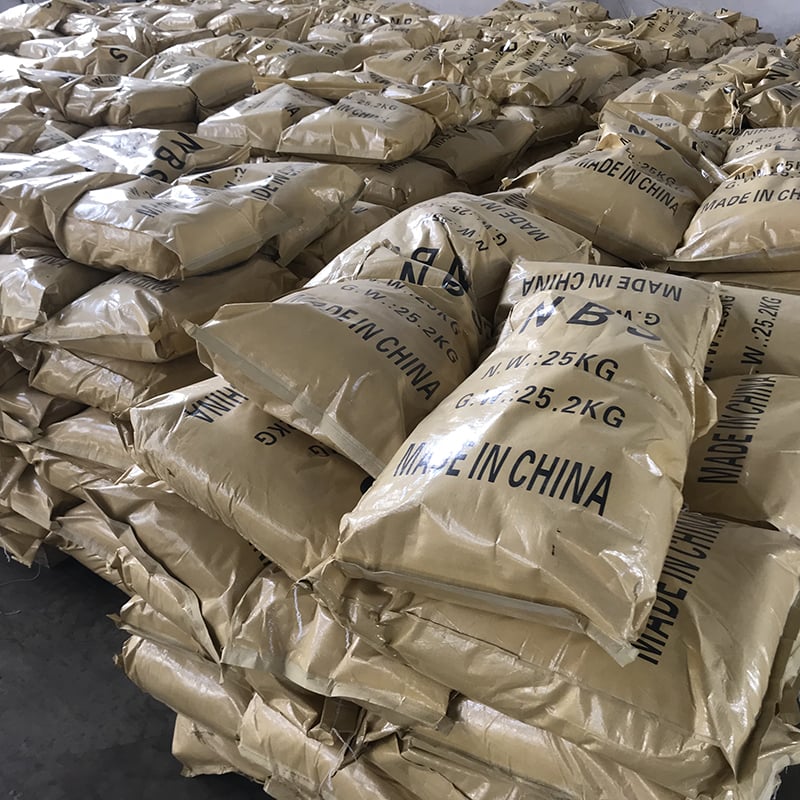
In organic synthesis, NBS is a versatile reagent: it not only effects brominations, but also other reactions such as the cyclization of substrates. Without taking full advantage of the distinctive reactivity of NBS, it is almost impossible to realize such challenging structural modifications with other reagents. This makes Suru nbs bromosuccinimide an important component in the toolbox of synthetic chemists as they develop new molecules with desired properties or functions.

 AR
AR
 BG
BG
 CS
CS
 DA
DA
 NL
NL
 FI
FI
 FR
FR
 DE
DE
 EL
EL
 HI
HI
 IT
IT
 JA
JA
 KO
KO
 NO
NO
 PL
PL
 PT
PT
 RO
RO
 RU
RU
 ES
ES
 SV
SV
 TL
TL
 ID
ID
 LT
LT
 SR
SR
 SL
SL
 UK
UK
 ET
ET
 HU
HU
 TH
TH
 TR
TR
 FA
FA
 MS
MS
 GA
GA
 BN
BN
 BS
BS
 LO
LO
 LA
LA
 NE
NE
 MY
MY


