
 AR
AR
 BG
BG
 CS
CS
 DA
DA
 NL
NL
 FI
FI
 FR
FR
 DE
DE
 EL
EL
 HI
HI
 IT
IT
 JA
JA
 KO
KO
 NO
NO
 PL
PL
 PT
PT
 RO
RO
 RU
RU
 ES
ES
 SV
SV
 TL
TL
 ID
ID
 LT
LT
 SR
SR
 SL
SL
 UK
UK
 ET
ET
 HU
HU
 TH
TH
 TR
TR
 FA
FA
 MS
MS
 GA
GA
 BN
BN
 BS
BS
 LO
LO
 LA
LA
 NE
NE
 MY
MY


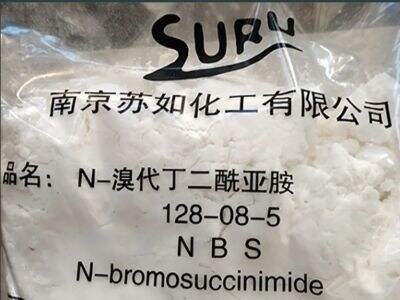
The starting material is treated with N-bromosuccinimide (NBS) and a radical initiator. This reaction is employed to add bromine into molecules, which can affect how they work. At Suru we are looking for ways to make chemical processes better and NBS is proving to be a useful tool for us. With NBS, chemists can fabricate new compounds that have countless industrial applications, such as medicine and agriculture and materials science. In this review, a focus on understanding how the use of NBS makes possible radical bromination and provides advantages in chemical transformations will be given.
N-Bromosuccinimide as the Ideal Reagent for Radical Allylic Bromination
One of the best things about NBS is that it can be very effective under gentle conditions. This is in part because chemists don’t need to use extreme temperatures or pressures to get the reaction to occur. For instance, while performing experiments on fragile molecules that are prone to falling apart, NBS provides a way for bromination to occur without destroying the compound. That’s a big advantage, because it allows you to make new and very complex molecules that were difficult to make before.
At Suru, we have observed the contributions NBS can make in diverse chemical reactions. It can be applied to develop new drugs or enhance properties of materials. For example, a scientist might use allylic bromination with nbs to add bromine to a molecule they are developing for an experimental drug. This can cause the medicine to work better or have fewer side effects.
NBS is also interesting in the way that it operates. It makes free radicals, and they are very reactive. These radicals can subsequently react with other molecules to form new compounds. It is this radical generation ability that makes NBS so effective in radical allylic bromination. It is as if you kick the reaction in the pants so that it will move faster and make the product you want better.
What Are Good Things That Happen During A Radical Allylic Bromination Using N-Bromosuccinimide?
A number of important advantages have contributed to the popularity of N-bromosuccinimide in radical allylic bromination. First, NBS is highly stable light and convenient to store. While a few sources of bromine on the market tend not to hold up for long, this one doesn’t easily disintegrate, so you can store it and use it as needed without any issues. This kind of stability is important in a laboratory, where many different reactions are occurring all at once.
It is also an advantage that NBS yields fewer byproducts. Unwanted substances produced as a result of chemical reactions are called byproducts which can interfere with the process. But nbs bromination solvent reduces those byproducts, which adds up to a less messy workup for chemists trying to harvest and purify the desired product. This saves time and is particularly important in an industrial environment. At Suru, we are strong advocates of the most effective but cleanest and easiest processes.
Furthermore, NBS is compatible with various other solvents market values that allow chemists more flexibility in their work. Other solvents are more optimal for other reactions, so it is nice to have NBS in your toolkit and then decide what works best. This is a huge advantage in the creation of new chemical reactions, because it enables creativity and innovation.
Finally, NBS may also provide economic savings over the long term. Although the cost of premium NBS may be more expensive at first than other bromininating agents, the additional efficiency and effectiveness provided can result in greater savings overall. With faster, cleaner processes comes the ability for companies to produce more and waste less. At Suru, we strive to help our clients solve the problems they face and also thrive in their field.
Finally, the described application of N-bromosuccinimide is a significant advancement in radical allylic bromination. Its stability, efficiency, and adaptability make it an indispensable tool for chemists and industry engaged in the development of new products as well as improvement in existing products.
Avoidance of Common Pitfalls in Radical Allylic Bromination With N-Bromosuccinimide
Radical allylic bromination is an unusual chemical reaction that adds bromine to certain types of compounds. One common way to do this is with something called N-Bromosuccinimide, or NBS for short. It is essential to use NBS properly due to some common issues that occur. For one thing, the reaction may not work out as expected. This can be the case if the temperature is too high, or if it is too low. It may also generate unwanted products if it is too high. If it is too low, the reaction could proceed too slowly. The solution to this is probably a compromise. It doesn’t matter how far a computer sits from one side or the other. "If I’m maintaining temperature, then that keeps the reaction smooth.
The quantity of NBS applied is another typical problem. If it is added in excess, we risk to introduce too many bromine atoms and this is not what we are looking for. On the flip side, if they use too little NBS, the reaction might not work at all. One method to overcome this is to measure precisely the desired amount of NBS based on the starting materials. Which requires a bit of math, or the services of a scale to get exactly right. Finally, the reaction occurs in a special liquid known as a solvent. It is also important to select the appropriate solvent, as some solvents can exacerbate the reaction. NBS will mix in with the other substances better and produce a superior product if mixed in a good solvent. Suru guides chemists through such steps and equips them with tools to facilitate and enhance the process.
How to Achieve Supreme Quality Product in a Radical Allylic Bromination Pathway?
It’s always better to consider the quality product that you will be getting from radical allylic bromination. That involves not only getting the bromine in, but also ensuring that the product is clean and pure. This can be avoided, for example, by using good starting materials. If the ingredients are impure, this can result in a messy reaction and unwanted byproducts. This is where Suru comes in. They include information about which materials are most appropriate for your reaction.
Then, the reaction conditions must be perfect. It was also affected by temperature, time and loading of N-Bromosuccinimide. If the temperature is too high, bromine will add to the wrong position. If it is too low, the reaction may never proceed at all. It’s good to do little tests first and see what works. That way when you actually do the reaction, you are assured that you will obtain a good quality product.
The product needs to be purified once the reaction is done. This could mean methods such as washing or filtering to remove any remaining materials. Techniques like chromatography can be used to separate the good stuff from the bad. Suru advice chemists getting the finest quality in their products by using these purification processes. Finally, keeping an eye on quality throughout the process from materials to purification guarantees a product that is effective and dependable.
What are some modern applications of radical allylic bromination?
Radical allylic bromination is increasingly gaining popularity in the context of modern chemistry, because it provides a useful approach for accessing new compounds. An example of an emerging application is related to medicine. Science is constantly in need of new drugs for diseases. Through a process known as radical allylic bromination, they are able to make new molecules that could also serve as medicines. It enables them to attach bromine to certain parts of a compound, altering the way that compound functions in the body.
Materials science is one of the other fascinating fields for application. Chemists are crafting new materials for electronics, or even entirely new kinds of plastic. Through the use of radical allylic bromination, they can develop materials with desired properties that are more ideal for these applications. It is also possible to achieve more control the final material, which can be stronger or more elastic.
Radical allylic bromination also expands its wings into the world of agriculture. Farmers need more effective tools to fight pests and diseases that threaten crops. New chemical compounds that can act as a pesticide are being created by scientists to keep crops safe. This not only helps farmers, but it is also insurance we have enough to eat.
In these applications, Suru has been critical in providing the research and resources necessary for some scientists to appreciate the power of radical allylic bromination. This way, they are better able to try out new concepts and develop new solutions. As these applications expand, the significance of radical allylic bromination in chemistry will further grow, rendering the field highly exciting to researchers and students need.
Table of Contents
- N-Bromosuccinimide as the Ideal Reagent for Radical Allylic Bromination
- What Are Good Things That Happen During A Radical Allylic Bromination Using N-Bromosuccinimide?
- Avoidance of Common Pitfalls in Radical Allylic Bromination With N-Bromosuccinimide
- How to Achieve Supreme Quality Product in a Radical Allylic Bromination Pathway?
- What are some modern applications of radical allylic bromination?